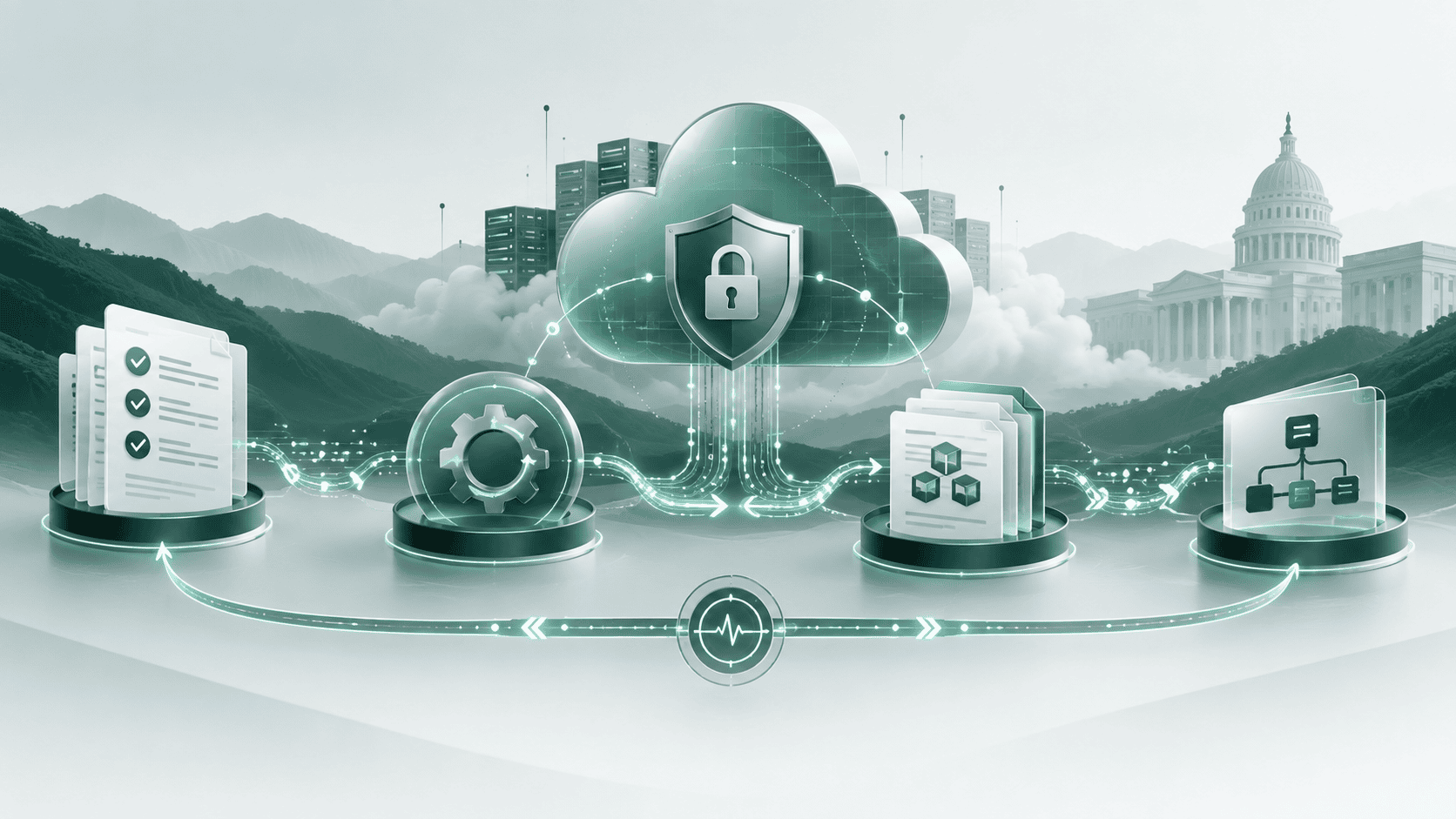

Enterprise learning does not happen in isolation. Training programs depend on employee data, roles, departments, permissions, assignments, reporting, content access, compliance needs, and the business systems already running across the organization.
When the LMS is disconnected from those systems, learning becomes harder to manage. IT teams get more tickets. HR and learning teams spend more time cleaning up data. Administrators manually update users, groups, and assignments. Reports take longer to reconcile. Learners run into access issues. Training programs become harder to scale across departments, locations, and business units.
For enterprise organizations, LMS integrations are not just a technical nice-to-have. They are what help learning operate at scale.
A learning management system may be owned by HR, learning and development, compliance, enablement, or operations. But when the LMS does not connect cleanly to the rest of the business, IT often gets pulled into the problem.
That usually happens in small ways at first.
A new hire does not receive onboarding in a timely manner. A department change does not update in the LMS. A learner cannot log in. A manager’s report does not match HR data. A training administrator exports one spreadsheet, compares it with another, and spends hours cleaning up records that should have aligned automatically.
Those problems may feel manageable when the program is small. They do not stay manageable for long.
As learning programs expand across more teams, learner groups, business units, and external audiences, disconnected systems create more work for everyone involved. The LMS becomes another platform to maintain, rather than part of the enterprise ecosystem.
Most enterprise organizations already have systems that manage people, identity, reporting, content, and operations. The LMS should connect to that environment rather than sit outside it.
That connection usually starts with people’s data.
When employee information flows from an HRIS or HCM platform into the LMS, learning teams can assign training based on the information the business already uses. New hires can receive onboarding. Role changes can trigger new requirements. Department or location updates can support more accurate assignments and reporting.
Access is another critical piece.
Single sign-on helps learners access training through the same identity systems they already use. That reduces friction for employees and helps IT maintain a more consistent access model.
From there, APIs and automation can help reduce repetitive administrative work. Instead of manually updating users, exporting completion data, or reconciling reports, teams can build cleaner workflows between the LMS and the systems that need learning data.
The goal is not to connect systems just to say they are connected. The goal is to reduce manual work, improve data accuracy, and make learning easier to scale.
For many enterprise LMS projects, the HRIS or HCM integration is one of the most important parts of the implementation. Employee data changes constantly. People are hired, promoted, transferred, reassigned, moved under new managers, or removed from the organization. If those changes do not flow into the LMS, training data quickly becomes outdated.
That creates problems for learning teams and IT teams.
The wrong person may receive the wrong assignment. A required learner may be missed. A former employee may remain active. A manager may not see the right team. Reports may not match the structure of the business.
A strong HRIS integration helps keep learner data more current and useful. It also gives learning teams a better foundation for assigning training by role, department, location, manager, job function, or business unit.
When people’s data is reliable, learning programs become easier to manage.
Learner access should not become a barrier to training. If employees need a different username, a different password, or a different support process just to access required learning, friction increases. That friction can lead to login issues, password reset requests, duplicate accounts, delayed completions, and unnecessary IT tickets.
Single sign-on helps reduce that friction.
For learners, SSO creates a simpler access experience. For IT teams, it helps the LMS fit into the organization’s broader identity and access strategy.
This matters even more in enterprise environments where training must reach large employee populations, multiple business units, contractors, partners, or external learners.
A connected LMS should not feel like a separate island. It should feel like part of the systems employees already use.
Manual LMS administration often becomes a hidden cost. Every user update, group change, assignment adjustment, completion export, and report cleanup takes time. At scale, that work slows down learning teams and increases the risk of errors.
Automation helps reduce that burden.
When the LMS can exchange data with other systems, teams can create cleaner workflows for user updates, group assignments, completion records, reporting, and other recurring tasks. That does not mean every process needs to be fully automated from day one. It means the LMS should be flexible enough to support automation as the organization’s needs grow.
Enterprise learning changes over time. The integration strategy needs room to grow.
Enterprise leaders rarely want learning data in isolation. They want to understand training by department, role, location, manager, compliance requirement, customer group, partner audience, or business unit. They may also need learning data to support compliance, onboarding, enablement, operations, or workforce planning.
That reporting becomes harder when LMS data does not align with HR or business data.
If the LMS uses different fields, structures, or outdated information, teams spend time reconciling reports rather than using them.
Connected systems make learning data easier to trust.
A scalable LMS should help learning, and IT teams report on training in a way that reflects how the business actually operates. That is what turns LMS reporting from an administrative task into a useful business tool.
LMS integrations work best when they are planned early. Too often, organizations focus first on courses, branding, and launch timelines. Then, late in the project, they discover that user provisioning, data mapping, SSO, reporting, and ownership require more planning than expected.
That creates rework.
Before implementation begins, IT, HRIS owners, learning leaders, and business systems teams should align on the basics: which systems need to connect, which system owns the data, what information needs to flow into the LMS, how learners will access training, what data needs to flow out, and who owns the integration after launch.
Those conversations help prevent problems later. They also help ensure the LMS supports long-term scale, not just the initial go-live.
When evaluating LMS integrations, it is easy to focus only on whether the platform has an API or supports SSO. Those matter, but they are not the whole story.
The better question is whether the LMS can support the organization’s actual operating model.
Can it work with the HRIS or HCM platform? Can it support secure access through the organization’s identity provider? Can it exchange data with other systems? Can it automate user updates and assignments? Can it support internal and external learner groups? Can it provide reporting that aligns with business structures?
A strong integration strategy should make the LMS easier to manage, trust, and scale.
Meridian LMS is built for organizations with complex learning environments, multiple learner groups, and integration needs that go beyond basic course delivery. Meridian supports flexible integration options, configurable administration, role-based assignments, advanced reporting, and learning programs that span internal and external audiences.
For enterprise teams, that means Meridian can help connect learning to the systems and workflows that already support the business, including HRIS data flows, SSO access, APIs, automation, content provider integrations, reporting, and extended enterprise learning.
The result is a learning platform that can scale with less manual effort and fewer disconnected processes.
Enterprise learning is easier to manage when systems work together. When the LMS integrates with people data, identity, reporting, content, and business workflows, organizations can reduce manual effort, improve data accuracy, and support training at scale.
That matters for IT teams. It matters for HR and learning leaders. It matters for administrators. It matters for learners. A disconnected LMS creates work.
A connected LMS helps the business move faster.
Download the Enterprise LMS Integration Playbook to learn how to plan scalable LMS integrations across HRIS, SSO, APIs, automation, reporting, and enterprise learning workflows.
Download the Playbook
Or request a demo to see how Meridian LMS supports flexible integrations, automation, reporting, and enterprise learning at scale.