
How to Choose an LMS for Departments of Corrections: 13 Key Requirements
Updated November 12, 2026
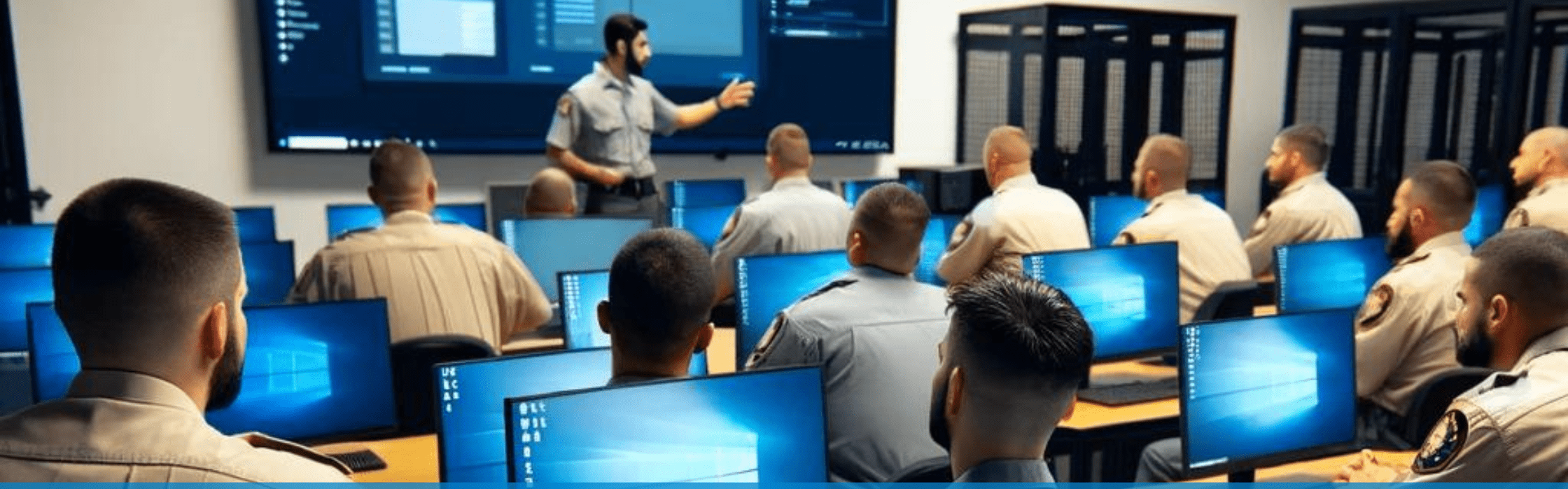
Departments of Corrections manage some of the most complex workforce training environments in state and local government.
Correctional officers, healthcare professionals, administrative personnel, supervisors, contractors, and specialized response teams require different onboarding, safety, compliance, and professional development programs.
Training requirements also vary by facility, job role, jurisdiction, security restrictions, and employee responsibilities.
At the same time, corrections agencies must maintain accurate training records, manage recurring certifications, respond to policy changes, support audits, and ensure personnel are prepared for the demands of their positions.
A learning management system (LMS) can help bring these activities together. However, choosing the right platform requires more than comparing basic course-delivery features.
The best LMS for a Department of Corrections should support complex organizational structures, automated compliance training, certification management, secure access, audit-ready reporting, and flexible learning delivery across multiple facilities.
This guide examines 13 essential requirements corrections agencies should evaluate when selecting an LMS and explains how the right platform can support workforce readiness, operational efficiency, and long-term training management.
Why Do Departments of Corrections Need a Specialized LMS?
Departments of Corrections need a specialized LMS because they must coordinate role-specific training, certifications, and compliance requirements across multiple facilities while maintaining centralized oversight and appropriate security controls.
Unlike a traditional corporate training environment, a corrections agency may oversee:
- State prisons and regional facilities.
- Probation and parole offices.
- Correctional training academies.
- Administrative and operational divisions.
- Healthcare and behavioral health personnel.
- Specialized emergency response teams.
- Contractors and external service providers.
Each location may have different staffing schedules, training requirements, reporting responsibilities, and administrative structures.
A centralized LMS should accommodate these differences without requiring every facility to maintain separate training systems.
For organizations beginning to modernize their training programs, our Meridian LMS for Departments of Corrections overview highlights common workforce training challenges and the capabilities needed to address them.
13 Essential Requirements for Evaluating a Corrections LMS
When comparing learning management systems, corrections agencies should consider how effectively each platform addresses their operational, administrative, security, and workforce development requirements.
The following 13 areas provide a practical framework for vendor evaluations and procurement planning.
1. Support Complex Organizational Structures and Multiple Facilities
One of the first considerations is how the LMS organizes facilities, departments, employees, and administrative responsibilities.
A statewide Department of Corrections may need to manage training across multiple levels, including regions, facilities, departments, units, job roles, supervisors, and contractor organizations.
The system should reflect how the agency actually operates.
Evaluate Multi-Tenant and Department-Level Administration
For example, a central training office may establish statewide learning requirements while facility administrators manage location-specific assignments and schedules.
Supervisors may need visibility into their direct reports without receiving access to unrelated employee records.
An LMS with multi-tenant or multi-domain capabilities can help organizations:
- Organize learners by facility, department, or role.
- Delegate appropriate administrative responsibilities.
- Maintain separate learning catalogs and requirements.
- Apply role-based permissions.
- Generate facility-level and statewide reports.
- Accommodate organizational changes.
Meridian LMS supports configurable organizational structures and multi-domain management, allowing agencies to balance facility-level autonomy with centralized training oversight.
2. Prioritize Security and Role-Based Access Controls
Corrections training systems may contain employee information, training histories, certifications, assessment scores, and other sensitive workforce records.
Protecting that information is critical when evaluating an LMS.
A secure corrections LMS should include role-based access controls, appropriate authentication, encryption, audit trails, and deployment options aligned with agency security requirements.
Establish Appropriate Access Permissions
Not every employee or administrator should have access to the same information.
A facility training administrator may need to assign courses and generate reports for one institution, while a statewide administrator may require broader visibility.
The LMS should allow agencies to define those responsibilities without exposing unrelated records.
Important security considerations include:
- Configurable user and administrator permissions.
- Single sign-on and identity management integration.
- Multifactor authentication support.
- Encryption in transit and at rest.
- Administrative audit logging.
- Data retention and access policies.
- Secure hosting and deployment options.
Meridian’s LMS security and compliance capabilities support these requirements through configurable controls designed for complex government and enterprise environments.
3. Automate Mandatory Corrections Training
Corrections agencies manage numerous required training programs throughout an employee’s career.
These may include onboarding, workplace safety, emergency procedures, ethics, use-of-force policies, professional standards, and specialized qualifications.
Manually assigning and monitoring these requirements across facilities can create significant administrative work.
Assign Training Based on Employee Responsibilities
An LMS should allow administrators to establish training requirements based on criteria such as:
- Job role and classification.
- Facility or department.
- Employee status and hire date.
- Supervisor or organizational group.
- Certifications and qualifications.
- Previous training completion.
For example, when a new correctional officer joins an agency, the LMS should support assigning the required onboarding curriculum.
If an employee transfers to another facility or changes positions, the LMS should review and update applicable training requirements.
Automation can help ensure employees receive relevant assignments while reducing manual administration.
Support PREA Training Requirements
The Prison Rape Elimination Act (PREA) establishes important training requirements for correctional organizations.
For adult prisons and jails, PREA Standard § 115.31 addresses employee training on sexual abuse and sexual harassment prevention, detection, reporting, and response.
It also establishes refresher training and documentation requirements.
An LMS can help manage assignments, completion records, assessments, and recurring training. However, agencies must ensure their processes also satisfy applicable acknowledgment and documentation requirements.
4. Manage Certifications and Recertification Requirements
Many corrections positions require employees to maintain professional qualifications, complete recurring training, or demonstrate specific competencies.
Tracking these requirements involves more than recording whether someone completed a course.
Agencies need to know when certifications were earned, when they expire, and what employees must do to renew them.
Automate Certification Tracking and Renewals
A modern corrections LMS should support:
- Certification issuance and expiration dates.
- Required prerequisites.
- Recertification learning paths.
- Automated renewal reminders.
- Overdue notifications.
- Manager and administrator visibility.
- Certification status reporting.
Without centralized tracking, agencies may rely on spreadsheets, individual calendars, or paper records.
These disconnected processes can make it difficult to determine which employees have current qualifications.
An LMS with automated certification management can help agencies maintain more accurate records and identify upcoming requirements before deadlines are missed.
5. Provide Audit-Ready Training Reporting
Correctional organizations must be able to demonstrate that employees have completed required training and maintained applicable qualifications.
Accreditation reviews, inspections, investigations, legal inquiries, internal audits, and regulatory oversight activities may require these records.
A corrections LMS should allow authorized administrators to retrieve accurate training histories, completion records, assessment results, and certification information without manually combining data from multiple systems.
Make Training Records Easier to Retrieve
Administrators should be able to answer questions such as:
- Which employees completed required training?
- Who has overdue assignments?
- Which certifications are approaching expiration?
- What training did an individual complete on a specific date?
- How do completion rates compare across facilities?
- Which employees have outstanding qualification requirements?
- What administrative changes were made to relevant training records?
Meridian’s LMS reporting and analytics capabilities provide configurable dashboards, scheduled reports, data exports, and audit information that support these needs.
These capabilities can help agencies strengthen training accountability and prepare documentation for appropriate reviews.
6. Support Online, Classroom, and Blended Training
Not every correctional training requirement can be satisfied through self-paced eLearning.
Some activities require instructor-led training, practical demonstrations, scenario-based exercises, hands-on assessments, or direct observation.
A comprehensive LMS should support multiple learning formats within a coordinated training program.
Combine Digital Learning With Practical Instruction
For example, a correctional officer might complete an online course introducing an emergency response procedure before attending a classroom session and practical assessment.
An LMS should support managing these activities as part of a single learning path.
Important capabilities include:
- Self-paced online courses.
- Classroom and instructor-led training.
- Virtual instructor-led sessions.
- Blended learning paths.
- Session scheduling and registration.
- Instructor and classroom assignments.
- Attendance tracking.
- Assessments and completion documentation.
Meridian’s Hybrid Classroom capabilities help organizations coordinate online, virtual, and in-person training through centralized scheduling, enrollment, attendance, and reporting.
This flexibility is especially valuable when agencies must work around shift schedules, staffing coverage, and facility operations.
7. Centralize Policy and Training Content Management
Correctional policies and procedures change in response to operational findings, regulatory requirements, leadership decisions, and evolving agency needs.
When training materials are stored on shared drives, in email attachments, or in individual facility files, outdated information can remain in circulation.
Maintain Consistent Training Content
A centralized LMS can help agencies manage approved training materials and distribute updated content to appropriate employees.
Administrators should be able to:
- Publish revised training materials.
- Retire outdated courses.
- Assign updated learning requirements.
- Communicate changes and deadlines.
- Evaluate employee understanding.
- Track completion of revised training.
The LMS should also support different content formats, including SCORM, xAPI, videos, documents, assessments, and instructor-led activities.
Meridian’s course creation and content management capabilities help organizations organize learning materials, manage course updates, and deliver structured training programs.
The goal is not simply to store content. It is to ensure employees receive accurate, relevant training that reflects current agency requirements.
8. Meet Government Accessibility Requirements
Government learning technology should be accessible to employees with different abilities, devices, and technology needs.
Include accessibility in the LMS evaluation process rather than addressing it only after implementation.
Evaluate Platform and Training Content Accessibility
Important considerations include:
- Keyboard navigation.
- Screen reader compatibility.
- Appropriate color contrast.
- Captions and transcripts.
- Accessible forms and navigation.
- Mobile-responsive interfaces.
- Compatibility with assistive technologies.
The federal government’s Section508.gov accessibility guidance provides information about federal information technology accessibility requirements and related policies.
State and local government agencies should evaluate the requirements applicable to their jurisdictions.
It is also important to distinguish LMS accessibility from course accessibility.
An accessible platform cannot automatically correct accessibility problems in uploaded documents, videos, or third-party training content.
Meridian LMS supports Section 508 and WCAG accessibility requirements, helping agencies evaluate learning technology for diverse workforce needs.
9. Integrate With Existing Government Systems
An LMS should not become another disconnected application requiring agencies to duplicate employee information and manually reconcile records.
Corrections organizations may need to integrate learning management with HR systems, identity providers, personnel databases, compliance applications, and business intelligence tools.
Automate Data Exchange and User Management
For example, an HR integration may support:
- Creating learner accounts for new employees.
- Updating employee departments or facility assignments.
- Maintaining supervisor relationships.
- Supporting training assignments based on personnel information.
- Deactivating accounts when employees separate.
- Reducing duplicate data entry.
Single sign-on can also simplify authentication while supporting existing agency identity management practices.
Meridian’s LMS integrations and APIs support connections with HRIS and HCM platforms, identity management applications, content providers, and reporting systems.
Agencies should evaluate each integration based on its functional requirements, security implications, and ongoing maintenance needs.
10. Provide an Intuitive Learner and Administrator Experience
An LMS can offer extensive functionality and still frustrate employees and administrators if they find it difficult to use.
Correctional personnel have different levels of familiarity with technology. Some may access training frequently, while others log in primarily to complete mandatory assignments.
Make Required Training Easy to Find
The learner experience should make it straightforward to:
- Locate assigned training.
- View deadlines and progress.
- Resume incomplete courses.
- Access available certifications.
- Identify renewal requirements.
- Register for instructor-led sessions.
- Complete training on approved devices.
Administrators need equally efficient tools to assign courses, manage learners, review certifications, and generate reports.
Usability is not about reducing advanced functionality. It is about making complex training requirements manageable for the people responsible for completing and administering them.
11. Ensure Scalability Across Facilities and Training Programs
A corrections LMS should support both immediate requirements and long-term organizational growth.
An agency may initially implement the platform for a limited number of facilities before expanding to additional locations, employees, contractors, and training programs.
Evaluate Long-Term Organizational Flexibility
Scalability considerations include:
- Number of employees and facilities.
- Administrative roles and organizational structures.
- Volume of training content.
- Reporting complexity.
- Concurrent system usage.
- Data storage and retention.
- Enterprise integrations.
- Additional learner populations.
A configurable LMS allows organizations to accommodate changing training requirements without relying on separate systems for every new department or program.
For agencies considering broader modernization, Meridian’s Public Safety and Corrections Training Modernization Guide provides additional guidance on reducing administrative complexity, improving certification visibility, and managing workforce training across facilities.
12. Evaluate Implementation Services and Ongoing Support
Selecting an LMS is only the beginning.
A successful implementation requires coordination among training administrators, IT, HR, security, procurement, facility leadership, and other stakeholders.
Look Beyond the Software
Before implementation, agencies should define:
- Organizational and learner structures.
- Required system integrations.
- Historical data migration needs.
- Administrative permissions.
- Reporting and certification requirements.
- Content migration priorities.
- Testing and acceptance criteria.
- Training and communication plans.
Evaluate vendors on their ability to support these activities.
Ongoing support is equally important.
Agencies should understand how support requests are handled, what administrator training is available, how upgrades are managed, and what technical resources are provided after launch.
Meridian offers LMS implementation services, including requirements planning, configuration, data migration, integrations, testing, administrator training, and go-live assistance.
Our U.S.-based team also provides ongoing support for customers managing complex learning environments.
For more information on deployment planning, see our related article on best practices for implementing an LMS in correctional facilities.
13. Understand the Total Cost of LMS Ownership
The cost of a learning management system includes more than its initial licensing or subscription fee.
Departments of Corrections should evaluate the complete cost of implementing, operating, and maintaining the platform.
Consider Direct and Operational Costs
Potential costs include:
- Software licensing or subscriptions.
- Implementation and configuration.
- Data and content migration.
- Enterprise integrations.
- Administrator training.
- Technical support.
- Custom development.
- Additional environments.
- Reporting requirements.
- Internal IT and administrative resources.
Agencies should also consider the cost of inefficient processes.
A lower-priced system may require additional manual data entry, spreadsheet tracking, custom workarounds, or separate applications to address missing functionality.
These activities can increase administrative costs over time.
Ask Vendors for Transparent Pricing
During procurement, ask providers to clarify which services are included and what activities may generate additional charges.
Important questions include how pricing changes as learner populations grow, which integrations are included, what support levels are available, and how future upgrades are handled.
Evaluating total cost of ownership helps agencies make purchasing decisions based on long-term operational value, not just the initial price.
What Questions Should Corrections Agencies Ask LMS Vendors?
Before making a purchasing decision, corrections agencies should request demonstrations that reflect their actual operational requirements.
Rather than relying entirely on standard product presentations, ask potential vendors to demonstrate real scenarios involving multiple facilities, recurring certifications, restricted administrative access, and reporting.
Important questions include:
- Can the LMS support our statewide, regional, and facility-level organizational structures?
- Can administrative permissions be restricted by facility, department, or role?
- Can training assignments be automated using employee information?
- How are certifications, renewals, and overdue requirements managed?
- Can the system generate both statewide and facility-level compliance reports?
- How does the LMS document course completions and administrative changes?
- Can the LMS manage online courses, classroom training, and practical assessments together?
- What accessibility and security capabilities are available?
- How does the LMS integrate with our HR and identity management systems?
- What implementation services, migration assistance, and ongoing support are included?
- How will the platform accommodate future facilities, training programs, and organizational changes?
- What is the full expected cost of ownership?
These questions help procurement, IT, and training teams evaluate whether a platform can support the department’s specific operating environment.
How Meridian LMS Supports Departments of Corrections
Correctional organizations need more than a basic training portal.
They need a configurable learning management platform that can coordinate mandatory training, track qualifications, support multiple facilities, maintain accurate records, and deliver learning through different formats.
Meridian LMS is designed for complex government and enterprise learning environments, including Departments of Corrections managing demanding operational and compliance requirements.
Centralized Training With Facility-Level Flexibility
Meridian’s multi-domain management capabilities allow agencies to organize training around facilities, departments, and learner populations while maintaining centralized oversight.
Configurable permissions help establish appropriate administrative responsibilities, allowing designated staff to manage training without unnecessary access to unrelated records.
This provides a flexible foundation for agencies coordinating training across multiple facilities and organizational structures.
Automated Compliance and Certification Management
Meridian LMS supports automated training assignments, certification tracking, recurring learning requirements, and notifications.
Agencies can manage mandatory training programs, monitor completion status, and identify employees with approaching renewal deadlines.
These capabilities help reduce administrative work and improve visibility into workforce qualification requirements.
Comprehensive Reporting and Audit Readiness
Meridian provides configurable reporting tools, dashboards, audit logs, and scheduled data exports.
Administrators can evaluate training completion, certification status, and outstanding requirements across facilities, departments, and employee groups.
This supports more consistent reporting while making it easier to retrieve documentation during audits, accreditation reviews, and internal oversight activities.
Flexible Training for Different Operational Needs
Meridian supports online learning, instructor-led classroom sessions, virtual training, and blended learning programs.
Agencies can combine these methods into structured learning paths and track participation through a centralized platform.
This flexibility is especially important when correctional employees must complete training around shift schedules and operational responsibilities.
Government Security and Deployment Options
Meridian LMS provides enterprise security capabilities, including encryption, role-based access controls, single sign-on integration, and administrative audit trails.
The platform also supports multiple deployment models, including cloud, dedicated cloud, and self-hosted environments.
For eligible government organizations evaluating certified cloud technology, Meridian offers a FedRAMP 20x Class C Certified cloud environment.
The certification applies to the specific certified offering, not automatically to every deployment option.
These choices allow agencies to evaluate learning technology based on their applicable security, infrastructure, and operational requirements.
Experienced, U.S.-Based Implementation and Support
Meridian Knowledge Solutions provides a 100% U.S.-based team experienced in supporting complex government and enterprise learning environments.
Our specialists assist with requirements planning, configuration, integrations, historical data migration, testing, administrator training, and ongoing technical support.
For corrections agencies managing large employee populations and multiple facilities, this combination of configurable technology and experienced services can help establish a more sustainable approach to training management.
Choose a Corrections LMS That Supports Long-Term Workforce Readiness
Selecting the right LMS is an important decision for Departments of Corrections.
The platform must do more than make training courses available online. It should help agencies coordinate complex requirements, maintain accurate records, support employee development, and provide the visibility needed to manage training across facilities.
By evaluating organizational flexibility, security, automation, certifications, reporting, integrations, accessibility, scalability, support, and total cost of ownership, agencies can make more informed technology decisions.
Meridian LMS brings these capabilities together in a configurable platform designed to support complex government training environments.
Whether your department is replacing an outdated LMS, consolidating training across facilities, or modernizing certification and compliance management, Meridian provides technology and services designed around your operational requirements.
Ready to evaluate an LMS for your Department of Corrections? Request a personalized Meridian LMS demo to explore how our platform can support training, compliance, and workforce readiness across your facilities.
